Repository navigation
Home
A from-scratch 2D UI rendering engine built entirely from mathematical primitives — no
GPU vector library (no Vello, Skia, or Cairo), no web engine, no Tauri/Electron. Shapes are
rasterized from signed-distance fields with analytic anti-aliasing, arbitrary contours from a
scanline path filler, and text from real TrueType outlines — a built-in, zero-dependency
.ttf parser and glyph rasterizer that reads the system font with std::fs. It composites,
lays out, and runs an interactive widget loop entirely on the CPU.
The name comes from the engine's foundation: everything is wired from eight root atoms —
scan · hash · fold · project · scale · compare · combine · order.
Zero dependencies by default.
cargo treeshows the whole workspace — library and examples — depending on zero external crates. The optionalgpufeature addswgpufor a GPU bloom tier; nothing else pulls a single crate.
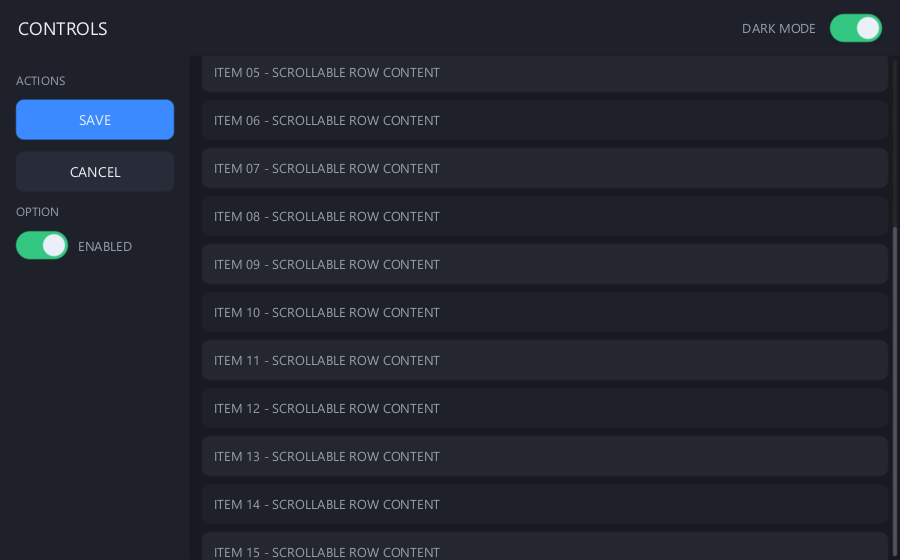
Most "lightweight" UI toolkits are only light because they hand the actual drawing to the OS (GDI/CoreGraphics) or a GPU library, or they embed a whole browser. Atom Rendering Engine draws every pixel itself, from math, with nothing underneath — and still stays tiny:
| Footprint | ~150–400 KB for a complete UI app (default, zero-dep); ~7.7 MB only if you enable the GPU tier |
| Dependencies | none by default (pmre-kit has an empty dependency list; the CPU path is pure std) |
| Text | real system TrueType glyphs, anti-aliased, cached — no font crate |
| Windowing | the live window drives Win32/GDI directly via raw FFI — no winit, no softbuffer |
-
pmre-kit— the kit: all the dumb, decision-free mechanism. The eight root atoms, geometry + affine transforms, SDF coverage + anti-aliasing, a scanline path rasterizer, gradients, alpha-over compositing, the TrueType parser + glyph rasterizer, rich inline text flow, the reduced flex/box layout solver, hit-testing, and clipping. Zero dependencies. -
pmre-orchestrator— the orchestrator: all policy, no mechanism. Painter order, the interaction state machine (hover / press / click / toggle / scroll / drag), scrollbars, the resize loop, and theQualitytiers. It drives the kit; it never touches a pixel itself.
The kit computes; the orchestrator decides. If a kit function grows an if that makes a value
judgement, that if belongs in the orchestrator.
- Shapes — rect, rounded-rect, circle, line via signed-distance fields with exact AA.
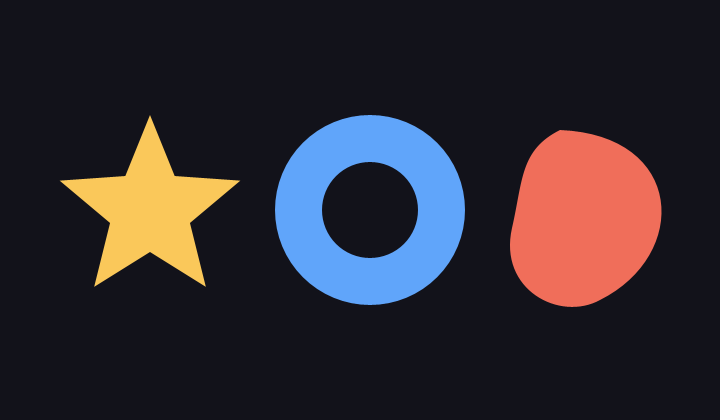
- Paths — fill and stroke arbitrary polygons and flattened Béziers (nonzero winding).
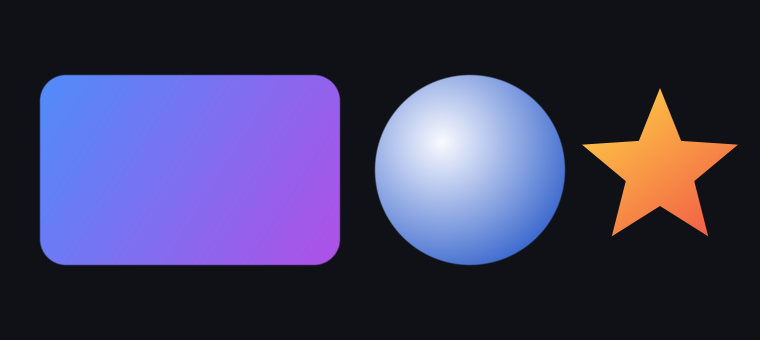
- Gradients — two-stop linear and radial, sampled per pixel.
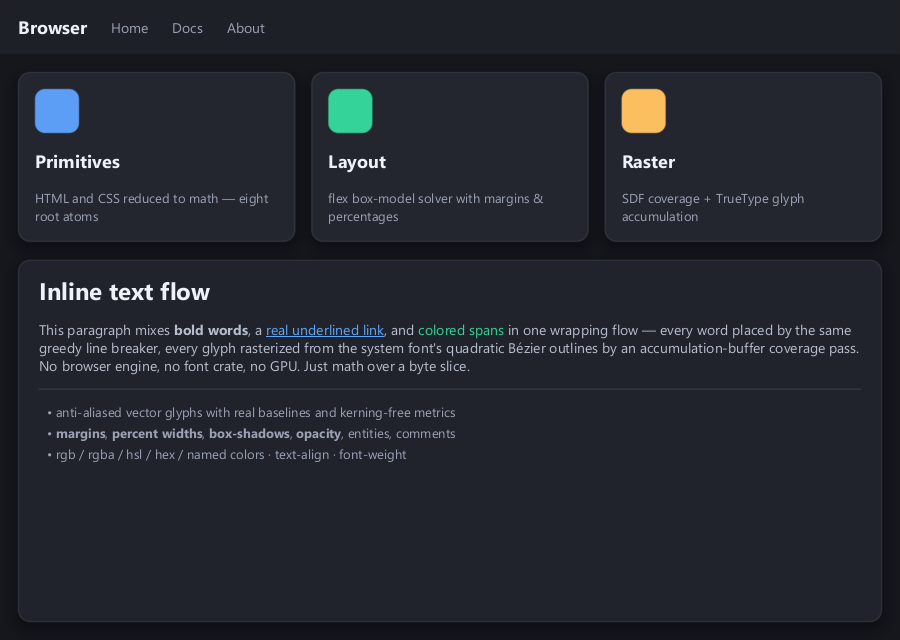
- Text — anti-aliased vector glyphs from the system font, plus rich inline flows that mix bold / underlined / colored spans in one wrapping paragraph. A bitmap fallback keeps things rendering even with no font file.
-
Layout — a reduced CSS-flexbox/block solver: row/column,
Auto/Px/Flex/%, padding, margins, gap, align, justify, borders, radius, and soft box shadows. -
Two front-ends, one core — a
UxNodeintent tree and an HTML/CSS document reduce onto the same box-model + layout + paint core. - Interaction — buttons, toggles, a scrollable region with a live scrollbar, text input with a caret and Enter-to-submit, and auto-resize reflow.
- Live window — a real, interactive, DPI-aware OS window with zero crates.
Everything below is drawn by the engine itself — no browser, no GPU vector library, no crates:
| Paths & holes | Gradients | Strokes |
|---|---|---|
 |
 |
 |
An HTML document with inline CSS, rendered straight to pixels — no browser engine:
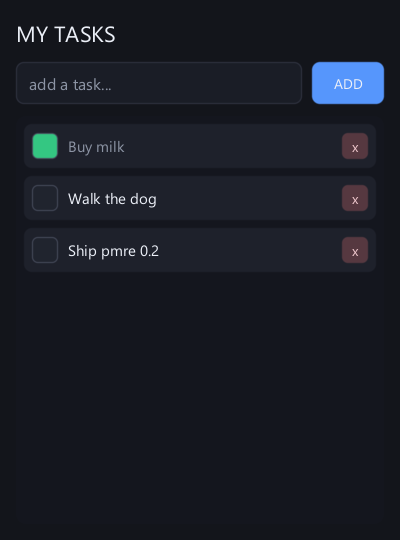
A live, interactive todo app built on the engine:
- Getting Started — add the crates, render your first frame, run the examples.
- Architecture — the pipeline from intent to pixels, the atoms, and the kit/orchestrator boundary.
- Developer Guide — the full embedding/extension reference in the repo.
MIT — see the repository.
Created by Jesse G. Alicea, a Lucerna Labs project.