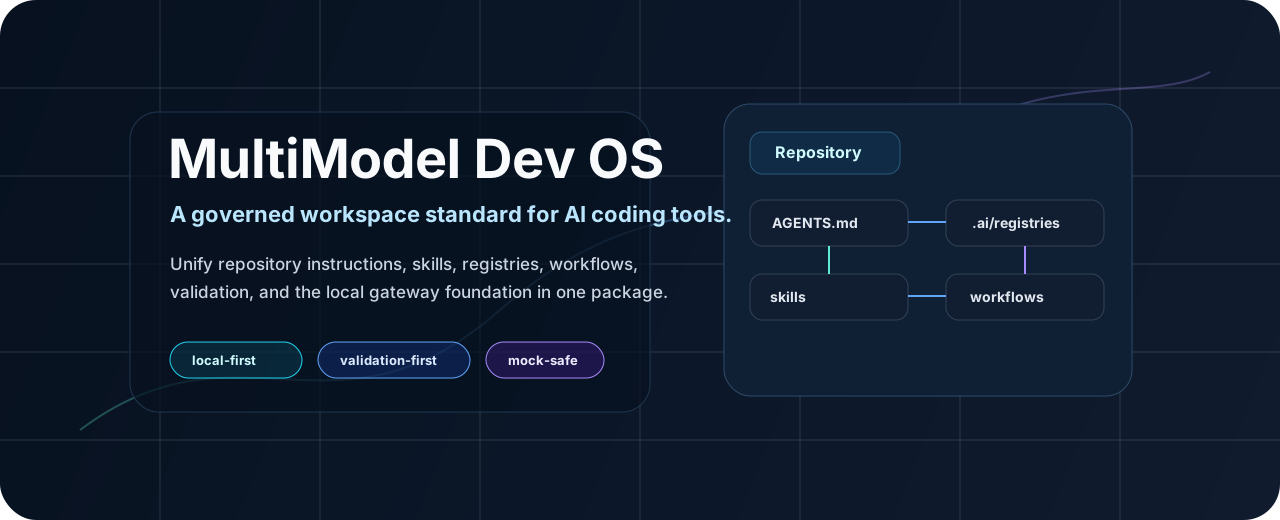





A zero-runtime-dependency workspace standard for governed AI development.
Centralize instructions, skills, registries, workflows, adapters, and local gateway metadata in one auditable repository.
Documentation | Quickstart | Documentation Map | Gateway Architecture | Changelog
Requirements:
- Node.js 20 or newer
- Windows, macOS, or Linux
npm install -g multimodel-dev-os
multimodel-dev-os init
multimodel-dev-os status
multimodel-dev-os verify
Prefer one-off usage:
npx multimodel-dev-os@latest init
npx multimodel-dev-os@latest verify
MultiModel Dev OS is published as multimodel-dev-os on npm. The package has no third-party runtime dependencies.
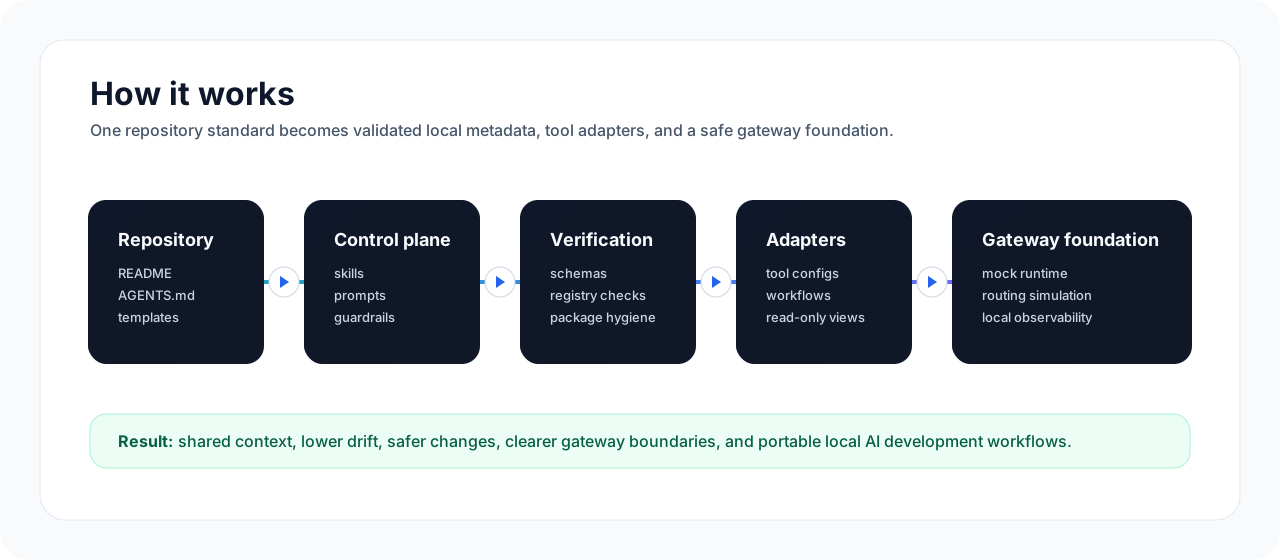
AI-assisted development gets messy when every tool has its own rules, prompts, memory, templates, and workflow assumptions. MultiModel Dev OS gives a repository one public source of truth so teams can keep that operating layer structured, portable, and verifiable.
It is designed for projects that need:
- consistent workspace instructions across AI coding tools and editor integrations
- governed prompt, skill, workflow, and permission metadata
- deterministic validation before changes are trusted
- local-first gateway foundations without activating external providers by default
- a clean public repository surface that stays package-safe
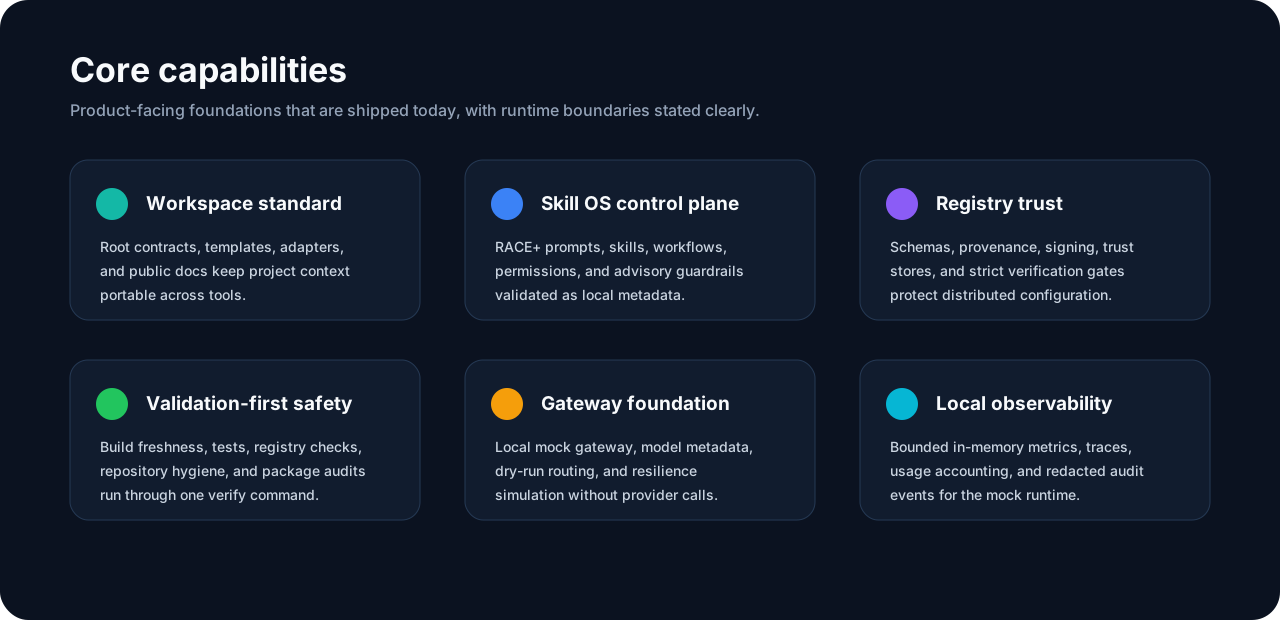
- Repository-level operating instructions in
AGENTS.md - Adapter assets for common AI coding tool surfaces
- Templates, examples, onboarding helpers, and consistency checks
- Deterministic build output for the standalone CLI
- Skill, prompt, workflow, permission, guardrail, and agent-cluster registries
- RACE+ prompt templates and public business operator templates
- Read-only Skill OS inspection commands
- Validation-only safety model for declarative governance metadata
- Localhost mock gateway runtime with
GET /health,GET /v1/models, andPOST /v1/chat/completions - Deterministic mock non-streaming and SSE streaming responses
- Runtime-readable provider, model, local-model, and routing-preset registries
- Dry-run route planning, fallback-chain planning, and resilience simulation
- Preview-only client configuration plans for local OpenAI-compatible testing
- Local, bounded, redacted, in-memory observability and usage accounting
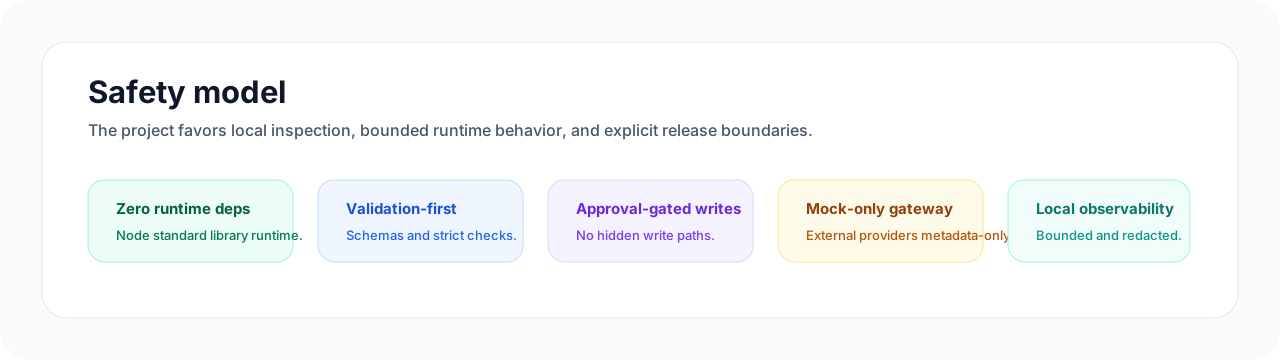
MultiModel Dev OS is intentionally conservative:
- No runtime dependencies: the published CLI uses Node.js built-ins only.
- Validation before trust: strict verification checks cover package hygiene, schemas, registries, docs, gateway contracts, and repository cleanliness.
- Manual publication: npm publication is maintainer-controlled and guarded by
scripts/prepublish-guard.js. - Approval-gated writes: generated plans and adapters are designed to avoid silent global changes.
- Mock-only execution boundary: the v4.2 gateway executes only bundled mock models.
- No hidden provider activation: external providers are metadata-only until a future explicit implementation enables them.
- Private-by-default observability: traces, metrics, usage, and audit events stay local, bounded, redacted, and in memory.
| Area | Current state |
|---|---|
| Workspace standard | Shipped. Repository instructions, adapters, templates, and verification are available. |
| Project templates | Shipped. Bundled templates cover web, commerce, SEO, mobile, and general app starting points. |
| Skill OS | Shipped. Registries, prompt templates, workflows, permissions, guardrails, read-only CLI inspection, and validation are available. |
| Registry trust model | Shipped. Signing, trust metadata, and verification checks are part of the package. |
| Gateway runtime | Shipped as a localhost mock runtime only. No external provider calls are made. |
| Client integrations | Shipped as preview-only configuration generation and local protocol fixtures. No third-party client is installed or executed. |
| Routing and resilience | Shipped as deterministic planning and simulation. Live fallback and retry execution are not enabled. |
| External provider execution | Planned for future work. Provider metadata exists, but credentials are not loaded and provider APIs are not called. |
| Production hosted gateway | Not shipped. v4.2 is a local gateway foundation, not a hosted SaaS gateway. |
# Inspect the workspace
multimodel-dev-os status
multimodel-dev-os verify

# Start or onboard a project
multimodel-dev-os init
multimodel-dev-os init --template nextjs-saas
multimodel-dev-os onboard analyze

# Inspect Skill OS metadata
multimodel-dev-os skill-os status
multimodel-dev-os skill-os validate
multimodel-dev-os skill-os list skills
multimodel-dev-os skill-os list prompts

# Synchronize adapter files when explicitly approved
multimodel-dev-os adapter sync all --approved
Onboarding analysis and planning are read-only. Applying generated files requires explicit approval.
| Topic | Start here |
|---|---|
| Product overview | Documentation index |
| Release state | Release state |
| Skill OS | Skill registry, Skill OS CLI, Authoring reference |
| Workflows | Workflow orchestration, Workflow examples |
| Gateway architecture | Gateway architecture, Gateway runtime, Gateway protocol |
| Gateway safety | Gateway security model, Known limitations, OpenAI compatibility |
| Clients | Client integrations, Compatibility matrix, Client configuration |
| Observability | Gateway observability, Usage accounting, Cost estimation |
| Release readiness | v4.2 release readiness |
- Latest npm package:
multimodel-dev-os@4.2.0 - License: MIT
- Runtime dependencies: none
- Required Node.js version: 20 or newer
- Optional GitHub Packages mirror:
@rizvee/multimodel-dev-os, controlled by GitHub Packages visibility settings
See docs/release-state.md for the current release matrix and historical notes.
src/        CLI, Skill OS, gateway contracts, runtime, routing, clients, observability
bin/        Generated standalone CLI entrypoint
.ai/        Product schemas, registries, skills, prompts, workflows, and examples
adapters/   Tool-specific adapter assets generated from the shared project standard
docs/       Public manuals, architecture notes, security docs, and release references
tests/      Unit, integration, fixture, and compatibility coverage
scripts/    Build, verification, package, and release-safety checks
Contributions are welcome when they preserve the project boundaries:
- keep runtime dependencies at zero unless a future major design decision changes that posture
- keep gateway provider execution explicit, tested, and documented
- avoid hidden writes, global configuration changes, telemetry, and credential loading
- keep public docs factual, polished, and free of private workflow artifacts
- run
npm run build,npm test, andnpm run verifybefore proposing changes
Read CONTRIBUTING.md and SECURITY.md before opening larger changes.
MIT. See LICENSE.